


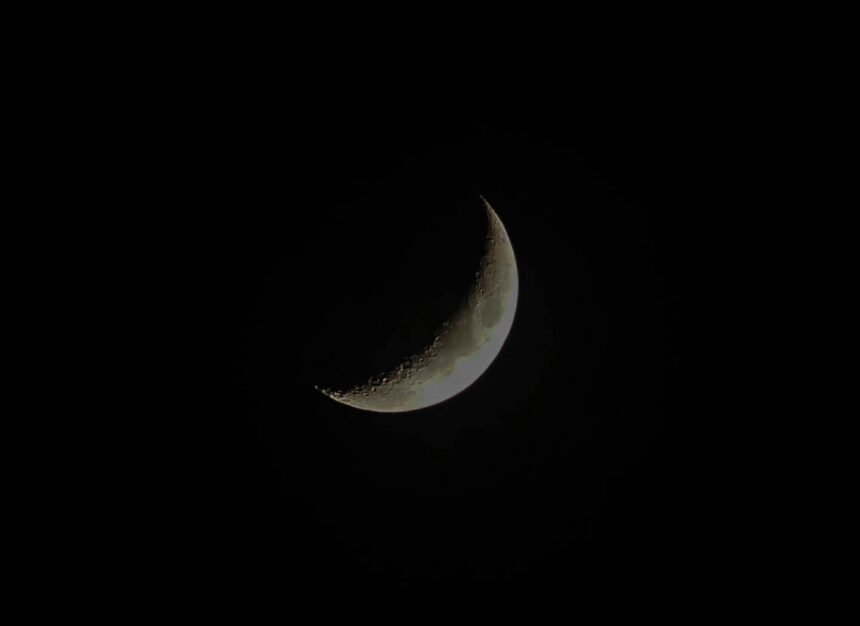
The annual uncertainty surrounding the Islamic calendar is not just a religious ritual issue; it is a legal anomaly hindering modern civilization. In this article, Dr. Bahori Ahoen, M.H., M.E. argues for the urgent transition from traditional Rukyatul Hilal (subjective visual moon sighting) to a Global Hijri Calendar (KHGT) based on objective scientific calculation (Hisab).
About This Journal
This interdisciplinary study connects Islamic law (Ushul Fiqh), modern astronomy, and economic analysis to advocate for a rigorous timekeeping system:
- Legal Certainty vs. Ambiguity: Subjective sighting leads to legal and economic uncertainty (e.g., for contract maturity dates). A unified calendar provides the objective certainty required for modern governance and commerce.
- Scientific Validation: Modern astronomical calculation is as precise as eclipse predictions. Rejecting certain scientific data (yaqin) for doubtful visual reports (syakk) contradicts the fundamental Fiqh principle: “Certainty cannot be removed by doubt.”
- Comparative Analysis: The paper compares MABIMS (regional), Ummul Qura (local), and KHGT (global/Turkey-Muhammadiyah) models, advocating for the latter as the most rational solution that unifies the Muslim world.
- Unified Ummah: A single calendar unifies the Muslim world’s rhythm of worship (e.g., Arafah Day) and strengthens political stability by removing subjective disputes.
Why It Matters
Adopting a global calendar is presented as a form of technological Ijtihad. It is essential for restoring dignity, order, and progress in the digital era, ensuring that Islamic timekeeping is predictive, objective, and unified.
📄 Read the full journal below: